Skip to content

paperless

Deer Collisions Season Started

What weighs 200 pounds, reaches speeds of up to 45 mph and can cost you thousands of dollars in a split-second? Deer collisions cost U.S. drivers millions every year, with an average repair cost of more than $4,000 for each claim. Odds for a deer collision double from October through December, so it’s time to understand the difference between comprehensive and collision coverages and learn more about how to avoid a deer accident: Be more alert at dawn and dusk, when deer are most active If you feel the need to swerve, use caution and be aware of oncoming traffic… Read More »Deer Collisions Season Started

Protection for Project Owners and Developers: Which Policies Work Best?

project developerA realistic evaluation of the risk that confronts project owners during and after construction indicates most owners are exposed to considerable liability. The ownership of property (including the ownership of buildings undergoing renovation) and construction work completed by contractors are two obvious examples.
While much of the risk is with the contractors, it is a mistake to conclude the owner has no potential for liability. While obtaining the status of additional insured on the contractor’s CGL policy or requiring the contractor to provide an OCP policy helps protect the owner, such coverage is quite limited and should not be the only liability coverage available to the owner. 
Owners of construction projects should have their own liability coverage. The Owner’s Interest CGL policy should be in place during construction to close the gaps in the owner’s liability insurance program and assure more adequate protection.
A Case Study

Condo Builder, Inc. is to build a residential development of 50 condos on a parcel of land that has been acquired by Condo Builder’s newly formed subsidiary, Haven Hills, LLC. As the project owner, Haven Hills will contract directly with Quality Contractors, Inc., an unrelated general contractor, to perform all construction work. At this point, the owners of Condo Builder begin to think about liability insurance to protect Haven Hills as the project owner. Which coverage works best for Haven Hills?

Additional Insured Protection – General Contractor’s CGL Policy
In the past, Condo Builder had not purchased liability insurance for the project owner, but instead had relied solely upon the owner’s status as an additional insured on the general contractor’s CGL policy. After all, the general contractor is in control of the construction site – so how could the owner be liable?

Unfortunately, Condo Builder learned some hard lessons on their last project – the Garden Estates project – whose owner was Garden Estates, LLC.Read More »Protection for Project Owners and Developers: Which Policies Work Best?

Reduce Risk from Wearables

Reduce Risk from Wearables
Image courtesy of franky242 at freedigitalphotosnet

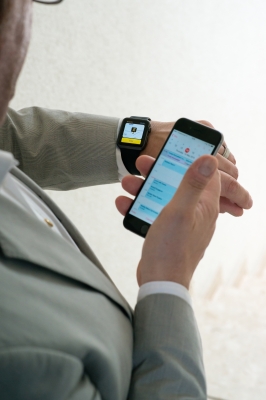
With the growth in wearable technology across all types of industries, companies that never before considered themselves in the technology business face new risks they need to be prepared for. Being aware of these threats and following strategies to help protect against them can help businesses focus on the growth opportunities that connected technologies make possible.

How Does Wearable Technology Work?

Wearable technology combines form and function, integrating the functionality of once-bulky devices into wearable gear in the form of watches, eyeglasses and more. These types of devices follow a common basic template for how they work. First, sensors capture impulses and translate them into actionable data. Then, microprocessors extract, transform and load data to a transmittable format. Finally, transmitters wirelessly send data to cloud storage for further processing and reporting.

With applications ranging from health and fitness monitoring to employee monitoring and safety, people can expect tremendous expansion driven by the health care industry, the corporate sector and consumer demand. According to PwC, over 80% of consumers said an important benefit of wearable tech is its potential to make healthcare more convenient, and 68% said they would wear employer-provided wearables streaming anonymous data to an information pool in exchange for lower health insurance costs.¹

What Are the Risks?

Read More »Reduce Risk from Wearables

3 Exposures to Consider on a Builder’s Risk Policy

3 Exposures to Consider on a Builder's Risk PolicyHard, Soft and Business Income Expenses

The resurrecting construction industry means that builder’s risk submission activity is on the rise. As such, it’s important to understand this line of business. Here’s an overview of some things to consider on a builder’s risk policy.

Construction contracts generally require the building owner or the contractor to purchase and maintain a builder’s risk policy. The policy provides coverage for loss or damage to the unfinished building’s construction materials on the work site during the course of construction, subject to certain restrictions and exclusions. The policy can also be extended to cover existing structures if the project is a renovation. Exposures are broken down into three general parts: hard costs, soft costs and business income or loss of rents.

Hard costs are the tangible assets that comprise the construction project; quite simply, the costs of material and labor associated with a project – also known as “sticks and bricks.”

Soft costs, also known as Delay in Opening Expenses, are usually covered and limited by special endorsements to builder’s risk property policy. Coverage is provided for additional construction
loan interest, real estate taxes, marketing and re-leasing expenses, administrative expenses, and architectural/engineering fees which are incurred as a result of a covered loss – one that causes delay in completion of a project. These expenses can be further broken down into two sub-categories: construction expense and additional soft costs.Read More »3 Exposures to Consider on a Builder’s Risk Policy

What happens when somebody totals their RV?

What happens when somebody totals their RVWhen you’re using an RV as a residence, you need the right mix of coverages to protect the RV as both a vehicle and a home. We have contracted with the carrier that has designed an RV insurance to specifically address the needs of RV owners.

Whether you have an old pop-up or a new motor-home, if the RV is totaled, our carrier has you covered. Because types of RVs and their styles vary so much, we know that different customers need different coverage options.

We offer:Read More »What happens when somebody totals their RV?

Travelers’ Cyber Risk Pressure Test

Risk_ControlPut your data and network security to the test.

What if your business was the victim of one of the 41,000 known computer security incidents per day in the U.S.?* In addition to knowledge about cyber insurance coverage options, you’re likely to be looking d for helpful, cost-effective cyber risk management resources.

When it comes to cyber risk, there is a lot at stake: data, reputation and a company’s bottom line. And every business, no matter the size or industry, is at risk of becoming a victim of an accidental or malicious compromise. This brief interactive quiz, which is mobile enabled, is designed to assist you, the business owner, to quickly evaluate and identity pressure points in your cyber risk management strategy.

Managing cyber risk is not a one-and-done process. Over time, your business may grow and change. Your data may represent new categories of information. Your technology hardware and software may be updated or replaced. Your workforce — both the people who use your data and the team responsible for protecting it — may change. And as technology itself evolves, so do the risks associated with it. Complacency can leave your data, your customers, your bottom line and your reputation vulnerable. Failure to address the risk often results in lost revenue, potential liability and high recovery costs. Implementing, maintaining and enforcing procedural and technological controls to protect your critical data and systems are key to the success of your cyber security strategy.

Read More »Travelers’ Cyber Risk Pressure Test

Ridesharing Insurance Rules in California

Free Gas Today Uber ridesharingA new law requiring that ridesharing drivers and companies have liability insurance coverage during all three periods in which they use the ride-sharing application went into effect 7/1/2015.
The rules are in effect under Assembly Bill 2293, which was signed into law in September 2014.

The law stipulated divides ridesharing activities into three periods.
[process_steps type=”horizontal” size=”small”] [process_step title=”Period one” icon=”mobile-phone” icon_color=”#ff0000″] App open and waiting for a match [/process_step] [process_step title=”Period two” icon=”map-marker” icon_color=”#beb509″] Match accepted, but passenger not yet picked up [/process_step] [process_step title=”Period three” icon=”car” icon_color=”#239c0a”] Passenger in the vehicle and until the passenger exits the vehicle [/process_step] [/process_steps]

AB 2293 requires:

Read More »Ridesharing Insurance Rules in California

Spotting Risks as Part Manufacturing Process

Put your supply chain to the test.

[notice]
Supply_Chain_Pressure_Test Supply chains are becoming increasingly complex, with dependencies upstream, in-plant and downstream. Which links in your supply chain might be most at risk? And what can be done to help manage it? Take our four-part questionnaire to help you uncover and avert potential risks in your supply chain before they emerge. Estimated completion time: 5 minutes.[/notice]

Supply chains are increasingly complex with dependencies upstream, in plant and downstream. Have you put your supply chain to the test? Not only will this brief mobile enabled test assist you in identifying opportunities within your supply chain, but the last page of the test will also provide educational resources and insights on how you compare to your industry and region.

Controlling threats that can impact the flow of quality, compliant and competitively priced raw materials is a critical link in your supply chain. Upstream disruptions often flow downstream. One delay, shortage, or defect in the materials you rely on could affect your ability to produce goods in the quantities and time-frames consumers demand. One could even compromise the safety and quality of your products. Failure to meet orders, product recalls, liability claims, and other potential ripple effects of supply disruptions can put your company’s reputation — and bottom line — at risk.

Control Your Supply Sources

Purchasing and vendor control are critical parts of the manufacturing process. Knowing who your suppliers are and where they come from is key to managing supply chain risk – particularly if they come from outside of the United States. Companies often change vendors frequently to get the lowest prices on raw materials. But establishing longer-term relationships with your suppliers can be an advantage. A supplier who understands your business might better anticipate your needs and be more willing to work with you to control costs or resolve issues when they arise.

Choose your suppliers carefully:Read More »Spotting Risks as Part Manufacturing Process

Playgrounds Business Insurance

Kids love playgrounds! They want to play and run around. Parents adore seeing their kids burn off that extra energy. The use of modern materials and custom computer design resulted in safer playgrounds. Yet a child or a parent can be injured. A commercial business insurance is a must have for any manufacturer, contractor or owner of a playground and equipment. General Liability Insurance for Playgrounds The three main types of protection that come with general liability are: Premises Liability Covers you for costs of incidents that occur on your playground. Product Liability / Completed Operations The products liability part… Read More »Playgrounds Business Insurance

Smoke and heat detection systems inspection, testing and maintenance

Smoke and Heat Detection Introduction

This article focuses on inspection, testing and maintenance (ITM) requirements for smoke and heat detection systems. Fire detection systems can provide early detection and notification of a fire emergency; therefore, it is essential that they are maintained appropriately.

This article also assumes that the smoke and heat detection systems are UL Listed or FM Approved systems and have been properly installed by reputable, certified, alarm system contractors. ITM programs cannot overcome poor system design or installation deficiencies.

The National Fire Protection Association (NFPA), Standard 72, National Fire Alarm Code, is the recognized standard for ITM of fire alarm equipment. For complete information on ITM of devices other than smoke and heat detectors covered within this bulletin, refer to NFPA 72, your equipment manufacturers operational/ maintenance manual or your Risk Control consultant.

This blog post is intended to familiarize building owners and/or persons responsible for fire detection systems about the necessary ITM of smoke and heat detectors. It is also intended as a guide on how to conduct ITM, ITM frequencies, and potential consequences for not having an ITM program for detection systems.

Smoke and heat detector differences
Read More »Smoke and heat detection systems inspection, testing and maintenance