
Take a quick inventory of your home and you’ll likely find more lithium-ion batteries than you expected. They power phones, laptops and tablets, but also earbuds, fitness trackers, electric toothbrushes, video doorbells, smart thermostats, cordless tools and vacuums, power banks, e-scooters, kids’ remote-control toys and, in many households, an electric vehicle or home solar battery.
These batteries pack a lot of energy into a small space. When one is damaged or mistreated, it can overheat in a self-feeding chain reaction called thermal runaway, which can quickly become a fire. The good news: a few simple habits go a long way.
What causes a battery to fail?
- Physical damage: dropping, puncturing or crushing it
- The wrong charger: one that isn’t compatible with the device
- Age: internal components wear down over time
- Heat: a device left on a heater, in direct sun or in a hot car
- Water: moisture can cause internal short circuits
- Manufacturing defects: the reason recalls happen
Know the warning signs
Stop using a device if its battery is swollen, unusually hot, corroded, smells strange, hisses or crackles, or shows dents, cracks or punctures. Don’t try to repair it yourself; contact the manufacturer. Batteries can fail even when they aren’t in use, so check on them now and then.
Charge smarter
- Use the charger that came with the device or one the manufacturer approves.
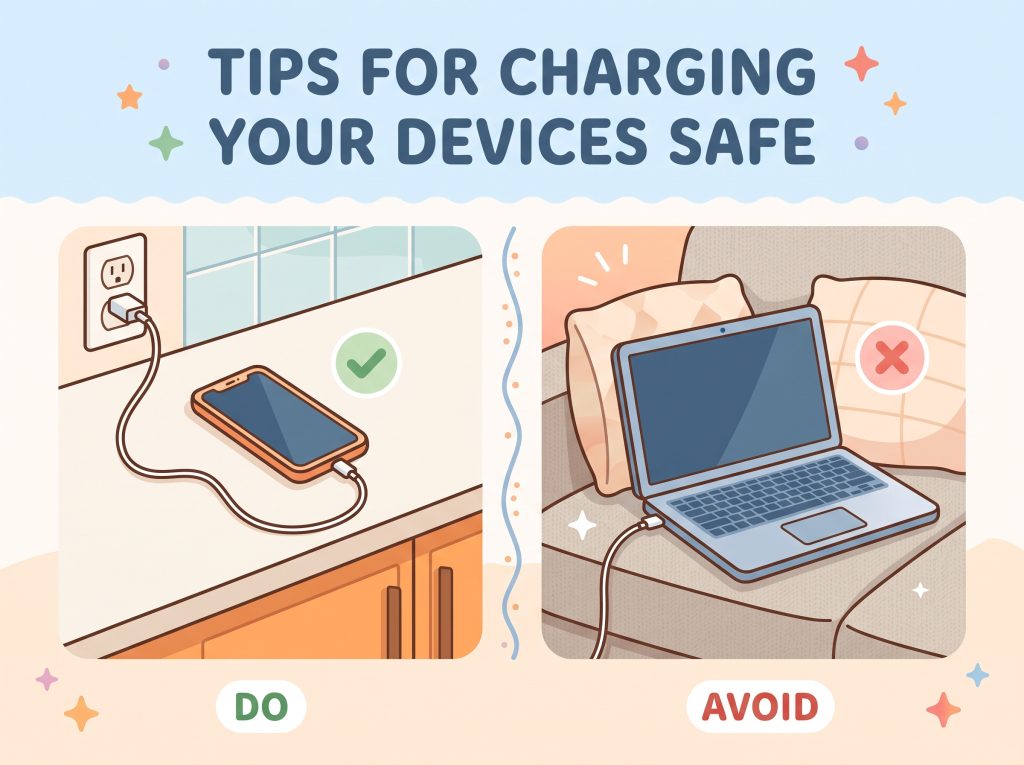
- Charge on a hard, flat surface, never on a bed, couch or carpet.
- Avoid charging overnight or while you’re away from home.
- Unplug once the battery is full.
- Look for a recognized safety certification such as UL or Intertek. (A CE mark only means the maker claims it meets European requirements.)
Store batteries safely
Keep batteries and devices in a cool, dry place, at least three feet from paper, wood, fabric and anything else that burns. Protect them from extreme heat and cold, and don’t run laptops on soft surfaces like pillows or blankets.
Dispose of them the right way
Never put lithium-ion batteries in the trash or your curbside recycling bin. Let the battery cool first. If it’s damaged or swollen, place it in a non-combustible container, such as a metal can, away from heat and sunlight. Then take it to a battery recycling or household hazardous waste drop-off; many hardware and electronics stores accept them too. Your local waste management service can point you to the nearest option.
If a battery overheats or catches fire
- Move everyone, pets included, away and call 911.
- If it’s safe, unplug the charger, but don’t touch or move the device.
- Don’t use water or a fire blanket; they can make the fire worse or cause it to reignite.
- Never use a damaged or swollen battery again, even if it still works.
A few habits, a lot of peace of mind
Make sure everyone in your household knows the safety instructions for the devices they use, and check for product recalls at least once a year. It’s also a good moment to confirm your homeowners or renters policy still fits your life. Questions about your coverage? Give us a call. We’re happy to help.
#BatterySafety #FirePrevention #HomeSafety #LithiumIon #HomeownersInsurance #SanFrancisco
Questions about your coverage? Call our San Francisco office.